There is a quiet revolution happening in homes everywhere, one that rarely makes headlines but changes everything: adults who are choosing to parent differently than they were parented.
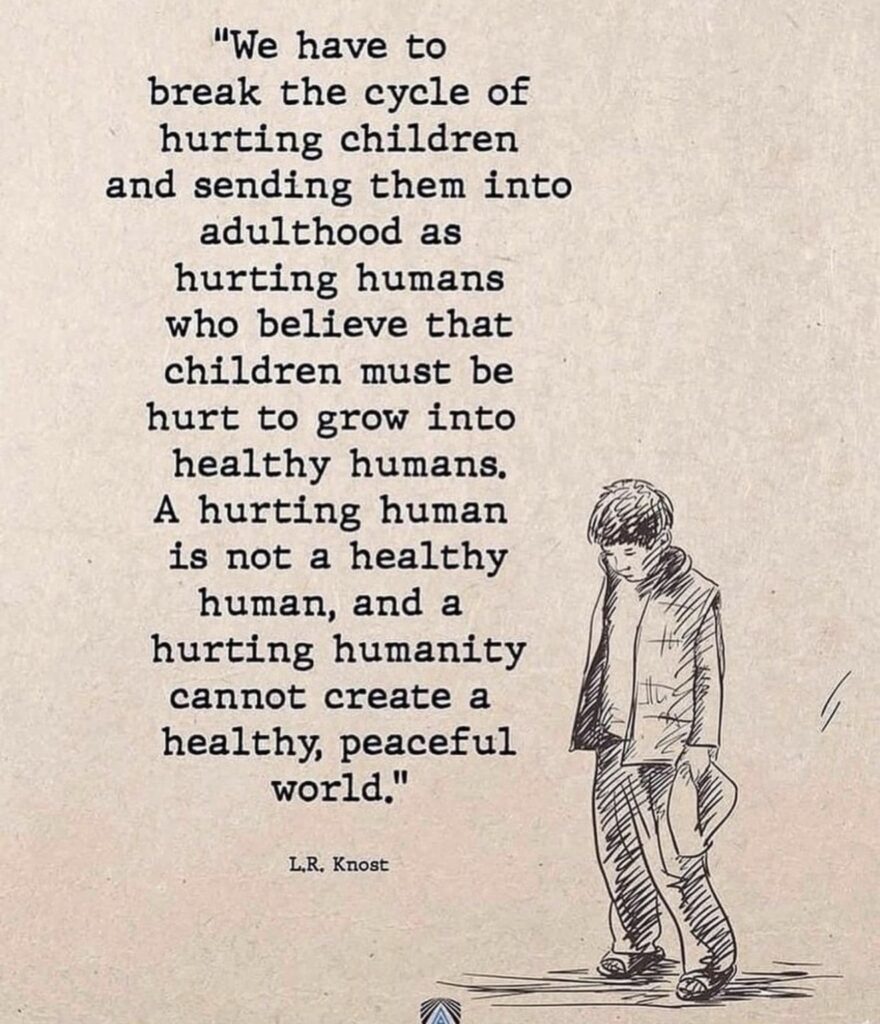
It starts with a simple but profound recognition: that the hurt we experienced as children didn’t make us stronger. It made us hurt. And if we’re not careful, it makes us hurtful.
The cycle L.R. Knost describes isn’t just about discipline methods or raised voices. It’s deeper than that. It’s about the fundamental belief that children must be diminished to grow, that their spirits must be broken to build character, that love must be conditional to motivate behavior.
But what if the opposite is true?
What if children who are met with respect grow into adults who respect themselves and others? What if boundaries can be taught without shame? What if mistakes can be learning opportunities instead of occasions for humiliation?
The hardest part isn’t learning new strategies, though that matters. The hardest part is sitting with the grief of recognizing what we needed and didn’t receive. It’s feeling the full weight of “I deserved better” while simultaneously committing to “they will have better.”
This isn’t about perfection. Healthy humans still get frustrated, still make mistakes, still need to repair. But there’s a difference between human imperfection and systematic harm. Between having a hard moment and creating a hard childhood.
A hurting humanity perpetuates itself through small, daily moments of disconnection. A healing humanity begins the same way: through small, daily moments of choosing connection instead.
The question isn’t whether we’ll pass something on to the next generation. We will. The question is: what will we choose to hand them?


0 Comments