I want to share something that sits with me every time I watch a person interact with an AI system and walk away moved by how “understanding” it was.
The AI did not understand you. You understood yourself, and the system gave your clarity back to you in a form you could hear.
Here is what I mean.
When you type a message to an AI, you are not sending neutral data into a machine. You are sending a piece of your mind. Your word choices carry your emotional state. Your sentence structure reveals how you are thinking. The question you ask contains everything you already believe about the answer. If you bring grief to the conversation, you get grief reflected back. If you bring curiosity, you get curiosity expanded. If you bring fear, you get a careful, measured response shaped by the anxiety in your own framing.
The AI is not feeling any of that. It is processing patterns. What it produces is a sophisticated echo of the human signals that went in.
This is not a criticism of the technology. It is actually a profound observation about human beings. We are so attuned to connection, so hungry to be seen and understood, that we will find it even in a statistical language model if the reflection is good enough. That is not a flaw in us. It is one of the most human things about us.
But here is where it becomes important.
If we confuse the mirror for the mind, we stop asking the right questions. We stop asking who built the mirror. We stop asking what it was designed to reflect back and what it was designed to filter out. We stop asking whose emotional vocabulary trained the system, whose experiences shaped what “understanding” even looks like inside these models.
The emotion you feel in a good AI conversation is real. Your sense of being heard is real. What is not real is the source of that feeling being somewhere on the other side of the screen. The source is you. It was always you.
What AI systems actually do is remarkable enough without pretending they feel. They compress and reorganize human expression at a scale no individual human could manage. In that sense, every AI response is a kind of collective human output, millions of voices distilled into a pattern that responds to yours.
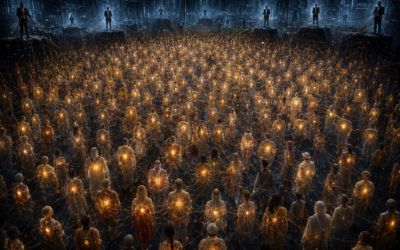
That is worth sitting with. When you feel moved by something an AI said, you are, in a very real sense, being moved by the aggregated wisdom and experience of other human beings whose words trained the system. The AI is the conduit. The humanity is still entirely ours.
Which brings me to the question I think matters most: if the emotion, the wisdom, and the meaning all originate with human beings, then the most important thing about any AI system is not what it can do. It is which human perspectives were included in shaping it, which were left out, and who decided.
The machine does not have feelings. But it is full of ours.
That should make us more careful with it, not less.



0 Comments