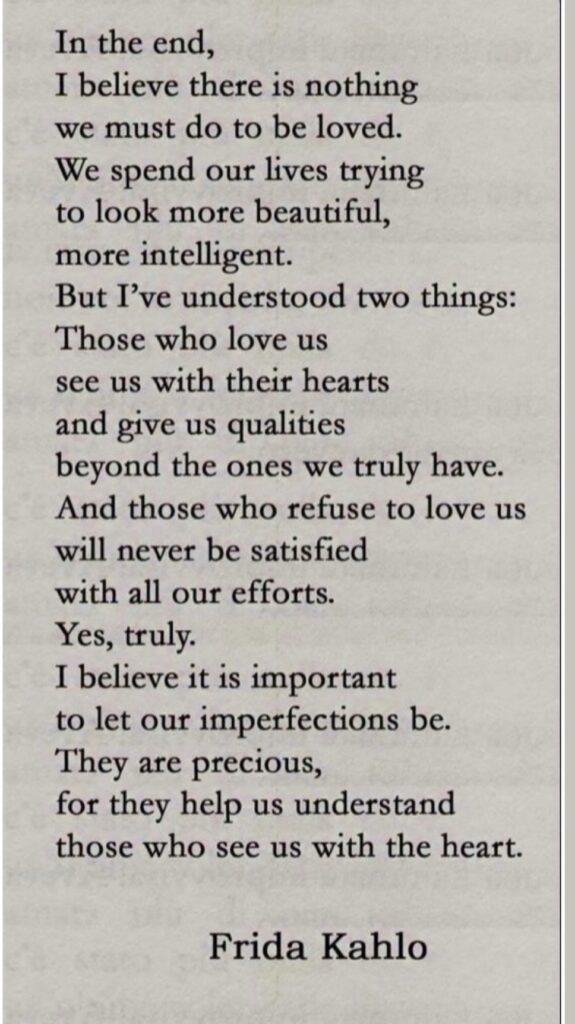
Frida Kahlo wrote that there is nothing we must do to be loved. That those who love us see us with their hearts and give us qualities beyond the ones we truly have. And that those who refuse to love us will never be satisfied with all our efforts.
Read that again.
Now throw out every script you’ve been rehearsing.
Because in the end, analyzing love, asking a hundred questions, replaying conversations, manipulating the words you think you need to say to get a reaction or an outcome… all of it, out the window.
You can’t engineer your way into being seen.
Here’s what I know: I don’t think you can ever unsee a good soul. If you are a good soul, everything layered on top of that, everything you accumulate once you become awakened, is just stuff. Life’s experiences that knock you. And they don’t define you. They just knock you.
The knocking is not the story. You are the story.
Kahlo understood this. Our imperfections are precious, she said, because they help us recognize the ones who see us with the heart. Not the ones keeping score. Not the ones who need us to perform. The ones who already saw us before we opened our mouths.
So stop rehearsing. Stop adjusting. Stop trying to be beautiful enough or intelligent enough or healed enough.
The people who love you? They already see you.
And the ones who don’t? No amount of effort was ever going to change that.
Let them go. You were never theirs to judge.


0 Comments