An unexpected journey into creativity, self-expression, and what it means to make something your own.
Someone recently raised a question about my music that got me thinking.
They enjoy the songs. They connect with the lyrics. But knowing AI was involved, they wonder:
Is that really Sam? Or is AI doing all the work?
It’s a fair question. And I think the answer is worth exploring, because this experience has taught me something about creativity, technology and, unexpectedly, myself.
It starts long before the song
I never set out to become a songwriter.
What I’ve always done is think. Observe. Question. Connect dots.
I spend an extraordinary amount of time trying to understand human behavior. Why we hurt each other. Why we crave belonging yet build walls around ourselves. Why people struggle to face uncomfortable truths. Why we inherit beliefs without questioning them. Why we create systems that sometimes work against the very humanity they’re supposed to serve.
I think about relationships, identity, power, neurodivergence, spirituality, injustice and the stories we tell ourselves.
Some of these questions come from experiences I’ve lived. Others come from years of observing people, cultures, institutions and patterns in human behavior.
And I’ve spent a significant part of my life trying to understand myself.
That journey hasn’t always been easy. I’ve had to question my assumptions, recognize my blind spots, confront my own narratives and understand how my experiences have shaped the way I perceive the world.
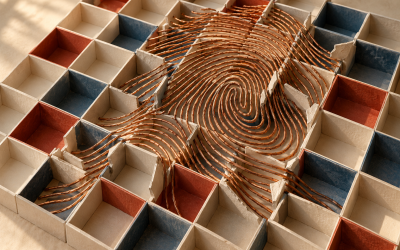
What I’ve learned is that we don’t always experience life simply as it happens. We experience it through the meaning we attach to what happens.
Sometimes those meanings are accurate. Sometimes they’re stories our wounds have written for us.
Learning to recognize the difference has changed how I see myself and others.
These are not subjects I suddenly discovered because AI arrived.
They’ve been living inside me for years.
Then something unexpected happened
I started having conversations with ChatGPT.
Not initially about creating music, but about life.
Sometimes I’d spend an entire conversation exploring a single thought. I’d describe an experience, question an interpretation, challenge a contradiction or try to articulate something I could feel but couldn’t quite put into words.
Often, I wasn’t looking for an answer. I was trying to understand the question.
Over time, those conversations became a collection of ideas, reflections and recurring themes.
Then I began wondering what would happen if I turned some of those thoughts into lyrics.
And suddenly, something that had always existed inside me had somewhere to go.
So who actually writes the lyrics?
This is where transparency matters.
I bring the ideas, the experiences, the observations and the meaning I’m trying to communicate.
Sometimes I start with rough lines. Sometimes it’s an emotional stream of consciousness. Sometimes I talk through an entire subject without knowing exactly where I’m going.
ChatGPT helps me identify the central theme, connect ideas, structure the story and turn it into lyrics.
Sometimes it generates entire verses.
Then I read them. I challenge them. I change the direction. I reject anything that doesn’t reflect what I mean. I ask questions. I add ideas. We go back and forth until the words communicate what I’m trying to express.
I’m not going to pretend I personally composed every sentence of the finished lyrics. That wouldn’t be accurate.
But I’m also not simply pressing a button and accepting whatever appears.
The experiences, observations and creative direction come from me. The finished lyrics emerge through collaboration with AI.
Both contributions are real, and I don’t see a reason to hide either one.
Then I discovered Suno
Once I had the lyrics, I started experimenting with music.
I’ve always had a deep connection to reggae. It has carried me through some difficult periods of my life.
There’s something about reggae that goes beyond the rhythm. It has a way of carrying pain without surrendering to bitterness. It can challenge injustice while remaining deeply human. It can make you think and move at the same time.
So I began describing the sound I wanted.
A deep, soulful female voice. A warm, smoky register. Jamaican roots reggae. Heavy melodic bass. Congas. African percussion. Sometimes spoken rap, particularly when I want an important question to land with more force.
Suno takes the lyrics and musical instructions and generates the composition, instrumentation and vocals.
I listen. I experiment. I change the style. I generate different versions until I hear something that captures what I was trying to communicate.
I didn’t sing those vocals. I didn’t play the instruments. I didn’t compose the melodies note by note.
AI generated those elements.
My contribution is the concept, musical direction, experimentation, evaluation and final creative choices.
And I’m perfectly comfortable explaining that.
But is it really creative?
I think this is where the conversation becomes interesting.
Traditionally, we’ve associated musical creativity with the ability to sing, play an instrument, compose or write lyrics.
Those are genuine skills. People dedicate years, sometimes entire lifetimes, to mastering them. AI doesn’t make that dedication meaningless.
But creativity also exists before technical execution.
It exists in the questions we ask.
In the connections we make between seemingly unrelated things.
In the perspectives we develop through our experiences.
In recognizing a contradiction nobody seems to be discussing.
In imagining something that doesn’t yet exist.
And in knowing whether what we’ve created actually communicates what we intended.
I don’t believe using AI automatically makes something creative. Nor do I believe every AI-generated song carries deep personal meaning.
But I also don’t believe creativity begins and ends with the technical ability to produce the finished work.
For me, AI has removed a barrier between having something meaningful to express and being able to express it through music.
That’s what makes this experience so liberating.
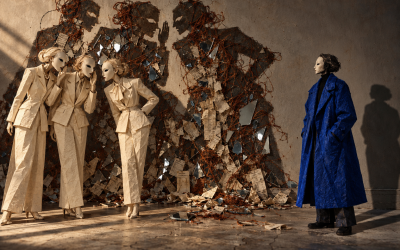
AI hasn’t lived my life
There’s another distinction that matters to me.
AI can recognize patterns. It can connect ideas, organize information and generate language about grief, love, belonging, injustice or self-awareness.
But it hasn’t lived those experiences.
It hasn’t experienced what a particular loss felt like inside my body. It hasn’t felt the fear, joy, confusion or transformation behind something I’ve shared.
It works with the experiences and meanings I communicate.
That’s an important difference.
AI can help articulate a human experience without having experienced it.
And that’s how I see our collaboration.
I bring the lived context. AI helps transform that context into something people can hear.
Inference is not the same as lived experience.
One can help describe the experience. The other is where the meaning originally came from.
From a thought to a song: Humanity, Unfinished
One example is a song I recently released on Spotify under my artist name, Frida Sam.
It’s called Humanity, Unfinished.
The song began with something I was struggling to reconcile.
How can we talk so freely about humanity, dignity and freedom while accepting a world where so many people are denied those very things?
We organize ourselves into countries, nationalities, religions, political identities and competing histories.
But underneath those labels are human beings.
Mothers. Fathers. Children. Families. People who love, fear, dream, grieve and want to live with dignity.
I wanted to go beyond writing about any one country or conflict.
I wanted to ask something more fundamental.
When we speak about human rights, do we really mean everyone? Or do we make exceptions depending on whose suffering we’re looking at?
That question became the foundation of Humanity, Unfinished.
I explored the idea through conversations with ChatGPT. We developed the lyrics, questioned the wording and refined the message.
Then I took the lyrics into Suno and experimented with deep soulful reggae, African percussion, congas and spoken rap.
I wanted the music to carry both grief and conviction. I wanted the rhythm to move people while the lyrics made them think.
Eventually, I had a finished song.
Something that had begun as a question in my head was now something another human being could listen to.
Listen to Humanity, Unfinished by Frida Sam:
That’s what this process means to me.
An idea that once lived only inside me has become something I can share with someone who may interpret it through an entirely different life experience.
And I find that fascinating.
The songs are also helping me understand myself
This may be the most unexpected part of the journey.
When I listen to a song that began as one of my reflections, sometimes I hear my own thinking differently.
An idea that felt complicated in conversation becomes clearer when expressed through music.
I begin noticing recurring themes.
The need to belong.
The stories we inherit.
The wounds we carry into relationships.
The difference between understanding someone and excusing their behavior.
Our relationship with truth.
The narratives we create in our heads.
The systems we build and unconsciously participate in.
The freedom that comes from knowing ourselves well enough to stop asking others to define us.
I see how these subjects connect.
My music project, The Unlearning, has become a way of exploring those connections.
Different songs. Different experiences. Different questions.
But underneath them is one continuing process: questioning what I’ve inherited, what I’ve believed, what I’ve become and what I might understand differently now.
There’s something strangely beautiful about hearing those thoughts turned into music.
Not because the music proves I’m right.
Sometimes it reminds me of how much I still have to question.
So, is it really me?
If the question is whether I personally wrote every finished lyric, sang every note and created every instrument, the answer is no.
If the question is whether these songs reflect my experiences, observations, values, questions and the way I understand the world, the answer is absolutely yes.
I don’t think those answers contradict each other.
I also understand why people have concerns about AI-generated art.
Questions about authorship, originality, ownership, compensation and the future of human creative work are legitimate. They deserve thoughtful discussion.
I’m not asking anyone to pretend AI-assisted music is identical to traditional musicianship.
It isn’t.
But I also don’t think we should assume that the involvement of AI means there is no meaningful human contribution.
What interests me is what happens when someone who has never had the technical ability to make music suddenly has a way to express something they’ve carried for years.
I’m not claiming to be a traditional musician.
I’m a human being who has found another way to communicate.
And perhaps that is what excites me most about AI.
Not that it can think for me, but that it can help me do something meaningful with the thinking I’ve been doing all along.
One final thought
I wonder how many people have something creative inside them that they’ve never expressed.
Not because they lack imagination or depth, but because they lack the particular technical skills, resources, time or confidence to translate that creativity into a finished form.
Maybe it’s music.
Maybe it’s writing.
Maybe it’s visual art.
Maybe it’s something none of us has imagined yet.
AI doesn’t automatically make any of those things meaningful. A human being still has to decide what they want to express, how they want to shape it and what responsibility they take for the result.
But it can open doors that were previously difficult or impossible for some people to walk through.
For me, that door was music.
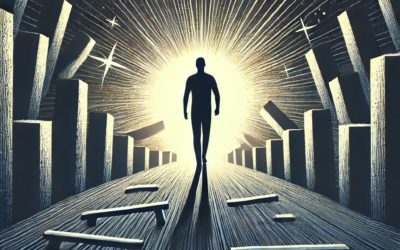
I had the thoughts.
I had the stories.
I had the questions.
Now I can hear them.
And sometimes, when I listen, I discover something about myself that I hadn’t fully understood before.
AI didn’t give me a life to write about. It gave me another way to express the life I’ve lived.
Frida Sam | The Unlearning

0 Comments