Viktor Frankl spent years in Nazi concentration camps observing what separated those who survived psychologically intact from those who didn’t. What he discovered wasn’t about strength or resilience in the traditional sense. It was about awareness of a gap.
“Between stimulus and response there is a space.”
This space is where our humanity lives. It’s the microsecond where we can choose our response rather than simply react. Animals respond to stimulus with instinct: immediate, automatic, survival-driven. But humans have this peculiar ability to pause, to observe ourselves responding, to choose.
The space is tiny. Sometimes it feels non-existent. When your mother pushes a boundary, when a client sends a frustrating email, when your body screams for rest but your to-do list screams louder, the stimulus hits and the reaction almost precedes thought.
But “almost” is the whole game.
The work isn’t eliminating reaction. The work is noticing the space exists at all. Then gradually widening it. One breath. One pause. One moment of “I’m noticing I want to respond defensively” before you actually do.
This is what separates reactive living from intentional living. This is what makes us not just conscious, but self-conscious: aware of our own awareness. This is the difference between being swept along by our conditioning and gradually, painstakingly, choosing who we become.
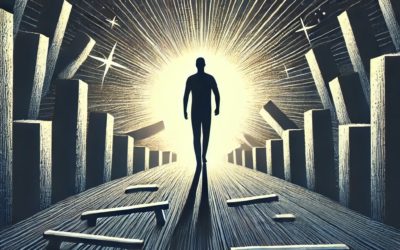
The frame in the image is empty because the space itself is the point. It’s not what fills it that matters. It’s the recognition that it exists at all.
0 Comments